
Smart Corporate Interior Design Ideas for Modern Workspaces
Modern offices are much more than functional workplaces. Businesses now want offices that improve productivity, reflect their brand, and create a better experience for employees. Traditional cubicle offices are slowly being replaced by smart, flexible, and employee-friendly workspaces. Corporate interior design has evolved far beyond traditional office layouts. Today’s offices are designed to feel more comfortable, collaborative, and welcoming – spaces where people come not only to work, but also to connect, collaborate, and feel inspired.
From calming living walls to smart technology-driven workspaces, this guide looks at some of the most innovative corporate interior design ideas to help your business thrive in today’s evolving work culture.
1. Why Offices Are Becoming More Than Just Workspaces
The way companies design offices has completely changed. Gone are the days when offices were just a place where people worked. Now they are designed as places where employees actually enjoy spending time. Creating a workplace that people enjoy has become an important part of modern office design.
Mini Campuses – The Office of the Future
In modern offices, teams and activities are now divided into different zones. Each one is tailored to a specific department, while still reflecting the company’s brand identity. It’s all about organizing office space in a way that makes sense. And it works – employees feel more at home, more connected, and way more productive.
Workspaces That Feel Like Luxury Hotels
Another major trend in modern office planning is the Hotel-Style Office Design. You know, the comfy lounges and the coffee corners that feel like they were plucked straight from your favourite café? That’s what we’re talking about. Reception areas that feel like you’re stepping into a hotel lobby, and coffee corners that make you want to just hang out. When you get it right, your employees will be a lot happier and a lot more likely to stay.
2. How is Biophilic Design Transforming Corporate Space Performance?

The modern office is all about being green – not just in terms of cost-efficiency, but also in terms of sustainability. Biophilic design is all about bringing the great outdoors in – think plants, sunlight, and all that good stuff. Research clearly shows that it reduces stress, boosts productivity, and makes for a healthier work environment.
Boosting Productivity with Green Relaxation Zones and Living Walls
A major innovation in corporate interior design is the Green Relaxation Zones – a dedicated space filled with air-purifying plants, moss walls, and trees – not only for aesthetics, but also to improve air quality and create a calmer and healthier work environment. As a result, innovative office projects are increasingly incorporating living walls – because they are not just decorative features, but actually make a real difference to the health and well-being of employees.
Natural Light and Adaptive Lighting
Lighting in offices has come a long way. Gone are the days of harsh overhead lighting. Companies are now using smart glass and open plan layouts to let in as much natural sunlight as possible. In the areas that don’t get so much sun, adaptive lighting is the way to go – it changes throughout the day to match the natural light, so you don’t get burnt out.
3. Making Your Office Spaces More Adaptable Than Ever Before

Business needs can shift dramatically overnight, which is why flexible workspace design has become so vital. Flexibility isn’t just about ripping out walls and starting from scratch – it’s about creating spaces that can evolve seamlessly as your needs change.
Movable Walls & Acoustic Pods on Casters – No Need for a Major Renovation
Innovative office layouts put a lot of emphasis on movable wall systems and acoustic pods that can be rolled in or out as needed. This means your office can quickly be converted into private meeting areas, just by moving some panels around. By investing in the best interior solutions, companies can effectively future-proof their real estate, allowing the workspace to adapt seamlessly as teams grow or change.
Case Study: Acoustic Pods on Wheels
A tech company with a huge open-plan office found they were struggling with all the noise and lack of good spots to have meetings in private. Rather than ripping out the walls to build some permanent rooms, they went for acoustic pods on wheels.
These movable, soundproof pods allowed employees to quickly create private spaces for calls and focused work. Since they could be moved easily, the office remained flexible and adaptable.
Results:
- Improved focus and productivity
- Better space utilization
- Lower cost compared to fixed construction
Conclusion:
Acoustic pods on wheels helped the company balance collaboration and privacy while keeping the workspace flexible.
Activity-Based Working – Zones for Different Mindsets
Moving away from the traditional assigned seating idea, top-performing offices are now creating zones that cater to different types of work. This means designing dedicated spaces for focused individual work (like a quiet library zone), quick brainstorming sessions (a huddle room), and team bonding (social spaces). Each zone is tailored to match the type of work that needs doing, so like everything else in office design, you get the right tools for the job. Think of it like adding soundproofing where focus is needed, or using bright, uplifting colours in collaborative areas. You get the picture.
4. Smart Tech and AI: Turning Your Office into a Super-Smart Space
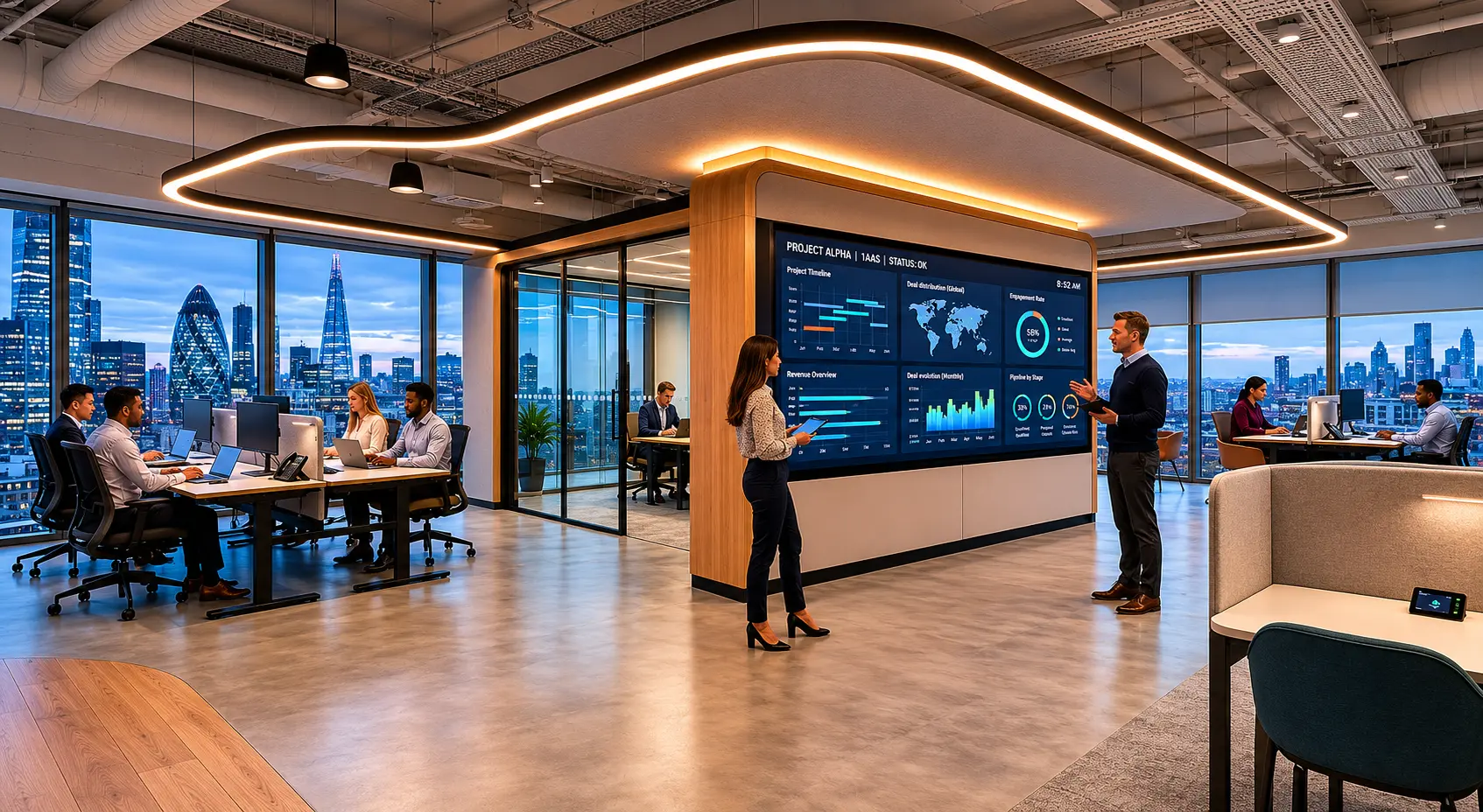
Modern offices are starting to use smart technology to make the workplace way more efficient. It’s all about integrating technology into your office interior design to create a seamless, intelligent space.
Smart Offices That Adjust Automatically
Advanced office infrastructure now integrates sensors that monitor office conditions in real time – including room usage, temperature, and air quality. If a conference room remains unoccupied, the system automatically saves energy by adjusting lights and temperature. This helps create more sustainable and energy-efficient office spaces.
Virtual Meeting Places with AR & VR
With so many hybrid work situations happening, modern office design needs to bridge the gap between in-person and remote work. Today’s boardrooms come with 360-degree cameras and AR (Augmented Reality – where digital visuals are added to the real world) and VR (Virtual Reality – where users interact inside a virtual environment).
This allows remote workers to appear almost physically present – on seamless LED walls or immersive setups – creating a more ‘in-person’ experience for everyone.
5. Designing for Different Thinking Styles

Designing an inclusive office space has moved on from just being about physical accessibility – it’s about supporting different types of thinking and working styles. Modern corporate interior design recognizes that everyone works differently.
Spaces for Different Work Styles
Inclusive workspace planning must offer a mix of sensory environments that cater to different work styles. Some employees thrive in busy, high-energy spaces, while others need quiet and calm work areas with soft colours, soft textures, and complete silence. Inclusive office design helps employees work more comfortably and efficiently.
Office Designs That Encourage Movement Throughout the Day
Standing desks were a start, but the best office design now goes a big step further – by making sure people can move around throughout their day, not just sit still all day. That means walking tracks built right in, flexible seating that lets people change up their posture, and furniture that encourages you to get up and move now and then. This reduces physical strain and improves employee comfort.
6. Eco-Friendly Materials for Modern Corporate Interiors
Corporate interiors tell everyone what kind of company you are, so it makes sense that by 2026, office design is all about sustainability – using materials that can be recycled, reused, or even composted.
Using Materials That Do Your Bit for the Planet
In sustainable office design, forward-thinking companies are already working with eco-friendly materials – like acoustic panels made from mushrooms, furniture made from recycled plastic from the ocean, and floors that are made from cork. These choices create a workspace that’s not just modern and beautiful, but really good for the planet too.
Renovate, Don’t Replace – The Benefits of Reuse
Rather than ‘rip it up and start again’, sustainable design philosophy now advocates for adaptive reuse. Instead of completely rebuilding office spaces, companies now upgrade existing structures with modern interiors and technology.
7. Using Corporate Interior Design to Tell Your Brand Story

Modern offices act as a reflection of the company’s identity, meaning the workspace must communicate the company’s story to anyone who walks through the door – clients, visitors, and employees.
The Experience Centre Lobby – Your Brand’s Front Door
When it comes to corporate office interior design, modern offices now focus on creating memorable and engaging workplace experiences, such as digital art installations that display your company data in real time or interactive ‘heritage walls’ that showcase your company’s history and plans.
Color Psychology & Cultural Cues – All About That Mood
Color plays an important role in corporate interior design – you can use it to influence mood. For example, deep blue or green shades in focus areas help create a calming environment. Vibrant orange or yellow shades in creative zones help create a more energetic environment. The best corporate office interior design combines these colors in a way that ties in with both your brand identity and what your employees need.
8. Putting Employees First – Wellness Centric Corporate Interior Design

As more and more companies start to see the light, realising that a happy, healthy workforce is the key to productivity, it’s fast becoming the standard for modern-day office spaces. The well-being of employees is no longer just a nice-to-have; it’s now a must. A good office design doesn’t just look nice; it can actually contribute to people’s physical, mental, and emotional well-being tangibly.
Dedicated Wellness Zones – Your Employees’ Sanctuary
Many modern offices now incorporate these special rooms, pods & even nap spaces into their workspace design. These quiet areas give employees a place to recharge during high-stress moments – helping improve focus and reduce stress. Some companies are also bringing in fitness studios or yoga areas – basically turning your office into a healthier and more comfortable workplace.
Clean Air, Clean Water & a Comfortable Temperature – Making Your Office a Healthy Place to Work
In modern office design, indoor air quality and general comfort levels are a top priority. By using smarter climate control systems, air purifiers, and humidity control, you can create a healthier and more comfortable environment for everyone. And let’s not forget those filtered water stations – placing them around the office is a great way to encourage good habits, while keeping everyone nice and toasty with thermal comfort systems.
9. Building Connections – The Heart of Modern Corporate Spaces
Your office used to be just a place to go to work – now it’s so much more than that – it’s where you hang out, collaborate, and build relationships with your colleagues. And that’s exactly what modern corporate interior design is all about. When it all comes down to it, what really matters is that everyone feels like they belong there.
Creating a Space Where People Feel at Home
Modern office design is all about creating a space where people just want to hang out – think of vibrant cafes, comfy lounge spaces, and meeting rooms for company get-togethers. The idea is to create spaces where natural interaction and collaboration just happen.
Incorporating Culture into the Design
A good office interior design isn’t just about placing some random furniture in a room; it’s about telling your company’s story. It’s about using art, materials, and space to make your employees feel valued & included. And when you do that, it really makes a difference to how much your employees feel like they belong in the workplace.
10. Data-Driven Design Decisions in Corporate Interior Design
By 2026, relying on gut feelings is going to be a thing of the past. When it comes to corporate office design, data is becoming an important part of workplace planning.
Putting the Data to Work – Practical Tips for an Improved Space
Thanks to sensors and some really clever workplace management software, facility managers are getting a whole lot more insight into how their space is actually being used. This gives companies a chance to refine their design by taking a close look at what’s working & what’s not. For instance, if your meeting rooms are always empty but your collaboration areas are always busting at the seams, that tells you exactly where you need to be making some changes to the layout.
Actually Listening to Your Employees
More and more companies are using online platforms that let their employees share their thoughts about the workplace. This has become an important part of creating a flexible workplace improvement strategy – it listens, takes that feedback on board, and then makes some changes to make things even better. This also supports continuous workplace improvement.
11. Making Your Office Design Flexible

When you’re in a fast-paced work culture, your corporate office ideas have to be adaptable – ready to evolve and change with the times.
Designing an Office to Adapt to the Future
A really effective corporate office design is one that ‘future proofs’ itself. That means stuff like raised flooring or modular ceilings – which are basically systems that can easily be upgraded as the years go by. And flexible wiring solutions that make it a doddle to throw in new tech without breaking the bank or having to rip out the old.
Designing a Space For Everyone
The top corporate interior design is one that supports both in-office and remote workers with ease. Think super-smooth video conferencing tools, fancy-pants meeting booths, and flexible seating areas that are comfy for everyone. It’s all about creating a space where everyone can do their best work.
12. Designing Offices that Put Employee Experience First
By 2026, corporate interior design will be playing a really big role in how employees feel about coming to work every day – it’s not going to be just about getting the job done anymore. Workplaces are evolving from functional spaces into experience-driven environments that attract the best people and keep them from leaving.
Tailoring the Work Environment to Each Employee
The best office interior design gets that every single employee has their own way of working. That’s why you see adjustable desks, custom lighting setups, and smartphone apps that let you control your workspace – all designed to let employees work the way they work best. This results in more personalized and user-friendly work experiences, so people can actually do their best work.
Even the Little Things Count
It’s all about the details – like how you get into the office in the morning, or where you can grab a cup of coffee. Even the entry system, interactive directories, and smart lockers get some thought put into them. And it’s not just about getting from A to B; corridors and waiting areas are now getting the strategic design attention they deserve, with digital displays, artwork, and even stories about the company on the walls.
Recognition and Belonging Through Design
Even more, corporate interior design can really bring out the personality of a company and inspire a sense of community & belonging. Think recognition walls, digital appreciation boards, or even just a spot to showcase team achievements. The goal is to create a sense of pride, belonging, and appreciation within the workplace, helping employees feel more valued and connected.
Conclusion:
Modern office design combines flexibility, sustainability, technology, and employee well-being. A thoughtfully designed office can improve productivity, enhance employee satisfaction, and strengthen brand image. A thoughtful design approach, like the one at Bludesign, can transform workplaces into spaces where employees feel motivated, connected, and more productive.


