
The Ultimate Guide to Choosing the Right Office Materials for Modern Productivity
Modern workspace design goes beyond mere functionality. It focuses on optimizing employee well-being and productivity through strategic material selection. Every single material you use plays a role in making the space feel just right – not just aesthetically but strategically too.
When picking out an office materials list, it’s not just about how they look – you’re also thinking about how they’ll impact employee comfort, the job they do, and the overall health of the space. The right materials can make all the difference when it comes to lighting, sound levels, and even air quality.
As businesses become more flexible, more focused on sustainability, and more aligned with a long-term perspective, choosing the right materials is now key to creating an office that not only looks great but is also adaptable and future-proof.
| Material Category | Key Examples | Primary Benefit | Best For |
|---|---|---|---|
| Sustainable Wood | FSC Timber, Reclaimed Wood, CLT | Natural warmth, eco-friendly, reduces workplace stress | Executive desks, conference tables |
| Advanced Glass | Smart Glass, Acoustic Glazing | Privacy on demand, natural light, noise reduction | Meeting rooms, office partitions |
| Metals | Blackened Steel, Aluminum, Copper | Durable, modern appearance, antimicrobial properties | Framing, shelving, high-touch areas |
| Acoustic Solutions | PET Felt, Cork, Mycelium | Sound absorption, sustainable performance | Open-plan offices, wall panels |
| Performance Fabrics | Recycled Polyester, Vegan Leather | Easy maintenance, comfort, sustainability | Ergonomic chairs, lounge seating |
| Stone & Concrete | Polished Concrete, Terrazzo | Premium look, highly durable | Lobbies, corridors, reception areas |
| Biophilic Elements | Living Walls, Clay Plasters | Better air quality, wellness-focused design | Feature walls, wellness zones |
| Innovative Technology | OLED Panels, Dry-Erase Finishes | Energy efficiency, collaboration-friendly | Ceilings, brainstorming spaces |
1. Sustainable Wood & Timber – A Must-Have for Your Office Materials List
Wood has always been a long-standing choice for professional spaces because it has that natural warmth and feel. Specifying FSC-certified timber is essential for integrating biophilic design, which is clinically proven to lower cortisol levels and reduce workplace stress.
When Reclaimed Wood is The Ideal Choice
Using reclaimed wood for your primary office materials list gives you a chance to add a sense of history and industrial charm to your space while doing the right thing for the environment – these reclaimed wood elements feel unique. They work beautifully as shared “war room” tables, feature walls, or even natural-style conference room tables. Because they have a unique character, they are much harder to replicate with new, mass-produced furniture.
Engineered Wood and Veneers
If budget is a concern when assembling your modern office material, then engineered woods might be a smart choice – like Cross-Laminated Timber. They offer some structural strength while keeping costs down. On the other hand, high-end veneers give you the luxurious look and feel of walnut or oak on large-scale surfaces – think reception desks – without increasing costs significantly. These versatile office materials ensure that even areas with heavy usage, like high-traffic hallways, can still look well-maintained.

2. Glass and Glazing Systems for a Transparent Office Materials List
Natural light is the ultimate benefit when it comes to a well-designed space. To bring in as much light as possible, your office materials list needs to make sure you’ve got the latest glazing technology that provides excellent clarity – no need to sacrifice privacy.
Smart Glass – The Secret to Instant Privacy
Glass that can be turned on and off at the touch of a button – that’s the key feature of smart glass. When you need to close a conference room in an instant or transform a public space in seconds, these office materials are highly useful. And let’s be honest – they are becoming a popular choice for high-end office material, offering a modern, low-maintenance substitute for traditional blinds.
Acoustic Glass for a More Focused Office
When it comes to partitioned areas – like private offices or conference rooms – acoustic-rated glass is a smart option. It lets you keep the open feel while still giving you the private space you need. And by adding double-glazed partitions to your materials list, you can be sure that even in very busy areas, your space will stay quiet and comfortable.

3. Metal and Industrial Elements in a Contemporary Office Materials List
The industrial loft aesthetic remains a key trend in urban office design. Adding metal to your office materials list is all about conveying strength, durability, and style – in other words, it adds a bit of sophistication to the overall space.
Blackened Steel and Aluminum: The Industrial Touch
Steel frames – often used in modular shelving and desk legs – are the go-to choice in many modern offices. They bring a strong and practical look to the space. And then there’s aluminum – great in ceiling baffles and door frames because it’s lightweight and pretty hard to damage. When you finish them in matte black or brushed gold, they add a really nice contrast with softer elements like upholstery and plants.
Adding Copper and Brass – a Touch of Luxury to Your Office
Want to add a bit of warmth and a premium feel to your office? Copper and brass are a great choice – they work well in light fixtures, handles, and small design details. They help the space feel more polished and inviting. Copper is also a practical option for frequently touched surfaces like door handles, as it naturally helps reduce germs – making it useful for modern workspaces.
4. Advanced Acoustic Solutions for a Functional Office Materials List
Managing sound in open-plan offices is all about keeping productivity going. Without the right solutions in place, noise can get in the way fast. When making up your office materials list, you’ll want to include great acoustic solutions that’ll not only keep things running smoothly, but also make the space look great.
Innovative Felt and PET Panels
Recycled plastic has got to be one of the most exciting trends in modern office design. PET Felt panel is a high-performance acoustic solution manufactured from post-consumer recycled polymers. Its modular nature allows for custom fabrication, making it ideal for noise attenuation in open-plan environments. Whether you’re looking to create some hanging dividers or install some wall panels to help absorb background noise, this is the perfect choice for you, especially as it’s eco-friendly.
Cork and Mycelium – Sustainable Sound-Solutions for a Better Space
Cork is one of those materials that just makes sense for creating an eco-friendly office space. It keeps the noise down and the temperature nice & comfortable, all while being very sustainable. And then there’s mycelium – essentially made from mushroom roots – it’s fully biodegradable, so you can use it without any problem.
Sustainable Acoustic Solutions That Work
Cork is a top choice for greening up your office design. Not only is it renewable, but it also keeps the environment nice and comfortable while reducing background noise. Then you’ve got new materials like mycelium (which is basically made from mushroom roots) that are biodegradable – a great sustainable option for offices that are all about being modern.
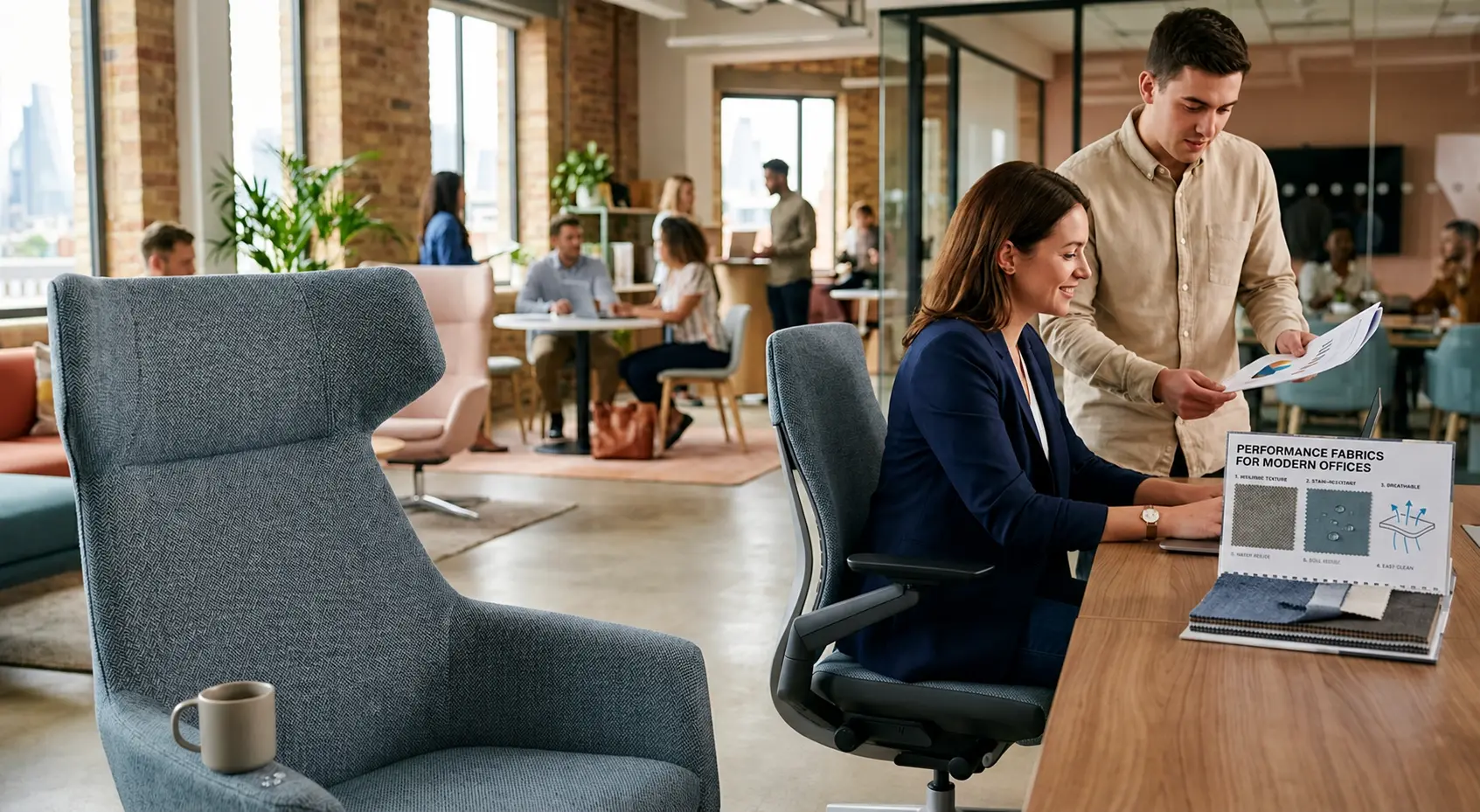
5. Performance Fabrics – Making Workspaces Functional & Long-Lasting
It’s the upholstery in your chairs and sofas that really makes the difference when it comes to how comfy and long-lasting your office furniture is – not just the chair itself. The right fabric can totally transform your furniture into something that’s not only easy to clean but also looks great, no matter how many people are using it, and can withstand the daily wear and tear.
Recycled Polyester and Wool Blends – Tough and Gentle at the Same Time
Durable is one thing, but eco-friendly is a whole other level – and recycled polyester certainly hits both of these marks for your office supplies list. Wool blends offer a few extra benefits – they’re naturally resistant to heat, can handle spills with ease, and they feel nice and soft to sit on – a great way to balance out harder materials like glass and metal.
Vegan Leather & Silicone – The Modern Touch
In high-end offices, traditional leather is being replaced by these fancy (yet still pretty budget-friendly) vegan alternatives. These materials pretty much replicate the look and feel of real leather, but with way less of a carbon footprint. Silicone-based fabrics, in contrast, are super easy to clean and don’t contain any of the nasty chemicals often found in PVC either. Put them together, and you get a seriously modern take on high-end interior design.
6. Concrete and Stone for a Grounded Office Materials List
To give your office a solid, long-lasting feel, you can rely on materials that are as durable as they are beautiful – like concrete and natural stone. They are especially popular in lobbies and corridors with high traffic, as you need materials that can handle everyday use.
Polished Concrete Flooring
Concrete has seen a major transformation – what was once just a structural element is now a popular flooring choice. It is widely used in modern and industrial offices because it’s so easy to maintain and reflects light effectively when polished. And it’s pretty cost-effective too, making it a great option for large spaces.
Terrazzo and Marble – Making a Real Impact
If you want to create a strong first impression in your reception interior design area, then terrazzo is a top choice. It’s basically a mix of marble, quartz, and granite, so you can get the perfect colours to tie in with your brand. Or if you want something a bit more sleek and high-end, then natural stone like marble is a great choice. Natural stone serves as a sophisticated, durable finish that signals a commitment to quality, significantly enhancing the aesthetic value of reception and executive areas.

7. Biophilic Elements: The Living Office – Best Materials to Bring Nature Indoors
When choosing office materials, nothing beats incorporating natural elements to get the most out of your space. A biophilic office materials list is all about bringing a bit of the outdoors inside to make the air healthier and your employees a lot happier.
Living Walls & Preserved Moss – Bringing the Outdoors Indoors
Adding some green to your blank walls isn’t just a good idea – it also enhances the overall environment. Vertical gardens can help improve air quality, while preserved moss is very low-maintenance (it doesn’t require regular watering or sunlight).
Clay Plasters & Natural Stone – Add Some Texture & Eco-Charm to Your Walls
If you want to give your office that unique something, try adding a bit of texture to your walls with a clay-based plaster. They look amazing, and also do the job of regulating humidity levels, creating a lovely, relaxed atmosphere that’s a nice change of pace from the usual painted walls.
8. Innovative Lighting Components – Lighting Up Your Space
Lighting is often overlooked in office design, yet it plays a crucial role in both functionality and atmosphere. The right lighting can make a massive difference to how comfortable and productive you feel in the space, and even create a sense of welcome that makes people actually want to go to work.
Harsh LED Lights for a Softer Glow – Recycled Acrylic & OLED Panels
We’re not talking about harsh LED light anymore – we’re talking about lighting that feels comfortable and is in control. Materials like the good stuff – high-quality acrylic can take the edge off and soften the glare on screens. Meanwhile, ultra-thin OLED panels can be stuck into your ceiling or even into your furniture – creating a really soft, even light that’s both comfy and energy-efficient.
Fabric Ceilings – Letting the Sunshine In
If your office is a bit short on natural light, fabric ceilings are well worth looking at. They do a great job of spreading the light around and getting rid of those nasty shadows and bright patches that come from just slapping a few lights in the ceiling. The result is a much softer, more balanced space that feels like it’s actually filled with natural light.

9. Using Recycled Plastic in Office Materials – A Greener Way to Go
Sustainability is no longer some trendy fad – it’s now a core part of the way businesses approach their office design, and it starts with the materials you choose. Using recycled plastics in your office materials is not just the right thing to do for the planet; it shows your customers and staff that you’re genuinely committed to being green and making a positive impact.
Turning Ocean Trash into High-End Office Furniture that Lasts
There are loads of companies now making high-end ergonomic chairs and desk accessories out of recycled ocean plastic – so you can get a product that’s both stylish and tough enough to withstand the daily grind in a busy office. At the same time, these products are all part of a bigger movement towards reducing waste and reusing materials in a meaningful way.
Recycled Resin Panels With Upcycled Color – Make a Statement
If you want to really make your office stand out, recycled resin panels are a great choice. Made from recycled plastic flakes, they bring a cool, modern vibe to your interior. Plus, you can use them for wall partitions, tabletops, or as decorative features – they’re just a lot lighter than stone, which makes them super easy to install and get to work with.
10. Modular Partitioning Fabrics and Moveable Office Materials
These days, flexibility has got to be a top priority in your office design. And it all comes down to choosing the right materials from the get-go. As you’re planning out your office, don’t forget to factor in some modular elements that support that Activity-Based Working (ABW) thing – you know, letting the space change up its vibe as needed.
Using Fabric to Create Flexible Spaces
Designers are getting creative with high-tension architectural fabrics – using them to create everything from phone booths to semi-private spaces in the office. And the best part? These materials are not only flexible but also very breathable, which means they help keep the air fresh and healthy in your office.
Turning Walls into Brainstorming Stations
Want to turn your office walls into a brainstorming zone? Add some magnetic or dry-erase finishes to your office materials list and watch your hallways and meeting rooms turn into super interactive spaces for idea-sharing. And as a bonus? This setup can also help cut down on the need for clunky whiteboards – keeping your office looking cleaner and more professional all around.

Conclusion: Designing a Future-Ready Workspace
Choosing the right office materials is way more than just how they look – it’s all about creating a space that truly works for the people in it and reflects the kind of company you are. It’s about choosing materials that can handle the daily grind, make people feel good, and are as adaptable as your business is. Whether it’s sustainable wood, eco-friendly plastics, or advanced acoustic solutions – every single material you choose is playing its part in shaping the look, feel, and functionality of your office.
Getting your office materials list right helps you achieve the perfect balance between design, functionality, and everyday usability. It ensures your workspace can handle daily demands while maintaining a clean, polished, and professional appearance. By incorporating sustainable and adaptable materials, you also prepare your office for future changes – making it both resilient and environmentally responsible. This is where a thoughtful approach, like the one followed by Bludesign, can make a meaningful difference.
As the workplace continues to evolve, the focus must remain on creating environments that prioritize the human experience – combining efficiency, flexibility, and comfort. By selecting the right materials at the specification stage, you are not merely designing an interior; you are building a resilient, sustainable workspace that remains relevant for years to come.


