
Introduction: Does Your Workspace Inspire or Expire?

Does your current workspace inspire you to generate new ideas, or does it feel like a tired environment stuck in the past? In today’s fast-paced corporate world, the physical space around you is no longer just a background for work—it is a vital part of the process.
A study by the World Green Building Council found that effective office interior design can boost productivity by up to 15%. Conversely, a cluttered, poorly lit, or cramped office can take a toll on staff, leading to burnout, exhaustion, and high turnover rates.
As we move deeper into the age of flexible work, the role of the office is evolving. It is no longer just a place to sit at a desk; it is a hub to collaborate with your team, build company culture, and execute focused work. If you want your staff to look forward to coming in, your office needs to project that energy.
This guide explores 7 modern office interior design ideas you can implement right now. Whether you are a start-up looking to make a splash or an established company refreshing your brand, these strategies will help you create a workspace that drives real business results.
Why Modern Office Interior Design is Essential for Business Success
Before diving into specific design trends, we need to address why investing in your office interior is a strategic business move, not just a cosmetic update. For industry leaders like Google—and for any company focused on growth—office design is a key tool in engineering human performance. The way people interact with their surroundings directly impacts their output.
Here is why upgrading your office interior design is a non-negotiable for modern businesses:
1. Attracting and Retaining Top Talent
The struggle to attract high-value employees is real. Today’s “A-players” prioritize work environments that support their health and happiness. A workplace featuring ergonomic furniture, good air quality, and dedicated relaxation zones signals that you care about their well-being. When staff feel valued, stress levels plummet and loyalty rises.
2. Using Your Office to Define Your Brand
First impressions count, and your physical office is the most tangible display of your company values. When a client walks in, what does your space say? Does it scream “innovation” with glass walls and open collaboration zones, or does it whisper “outdated” with beige walls and isolated cubicles? Good design articulates your identity instantly—whether that means sustainability, creativity, or precision.
3. Firing Up Team Collaboration
The era of the isolated cubicle is over. Modern business thrives on cross-functional teamwork. Collaborative workspace design breaks down physical barriers, encouraging spontaneous interactions in break rooms or design pods that often lead to the best innovative ideas. An optimized layout ensures the workday flows smoothly, allowing teams to switch between tasks without hiccups.
The 7 Modern Office Interior Design Ideas
Here are seven ideas to shake up your workspace and move beyond the traditional setup.
1. Workspace Revolution: Flexible & Agile Spaces
The days of rigid, assigned seating are behind us. The modern workforce demands an office layout that adapts to the task at hand. This approach, known as Activity-Based Working (ABW), creates specific “zones” for different working styles:
- Focus Spaces: Soundproof pods or quiet corners with high-walled seating that allow employees to get lost in deep work without interruptions.
- Collaborative Zones: Open areas equipped with large tables, whiteboards, and ergonomic chairs to make brainstorming sessions seamless.
- Social Lounges: Café-style areas that encourage informal chats and mental breaks.
By investing in versatile furniture—like modular desks and movable walls—you future-proof your office. As teams grow or shrink, the space adapts without requiring a costly renovation.

2. Integrating Biophilic Interior Design for Well-being
Biophilia isn’t just a fleeting fad; it is a fundamental human need. Connecting with nature inside the workplace is proven to significantly reduce stress levels. Implementing biophilic interior design goes beyond placing a potted plant in the corner:
- Living Walls: Install vertical gardens in reception areas or meeting rooms to purify the air and add a vibrant splash of color.
- Natural Materials: Prioritize wood, stone, and bamboo over synthetic materials. These textures bring a warmth that plastic simply cannot match.
- Water Features: For high-stress environments, the sound of running water provides a soothing auditory backdrop.
When you integrate natural elements into your office design, you create a psychological safe space where employees genuinely want to spend time.
To know more about biophilic interior design idea visit this blog content- https://www.iiad.edu.in/the-circle/what-is-biophilic-design-in-interior-architecture-and-design/
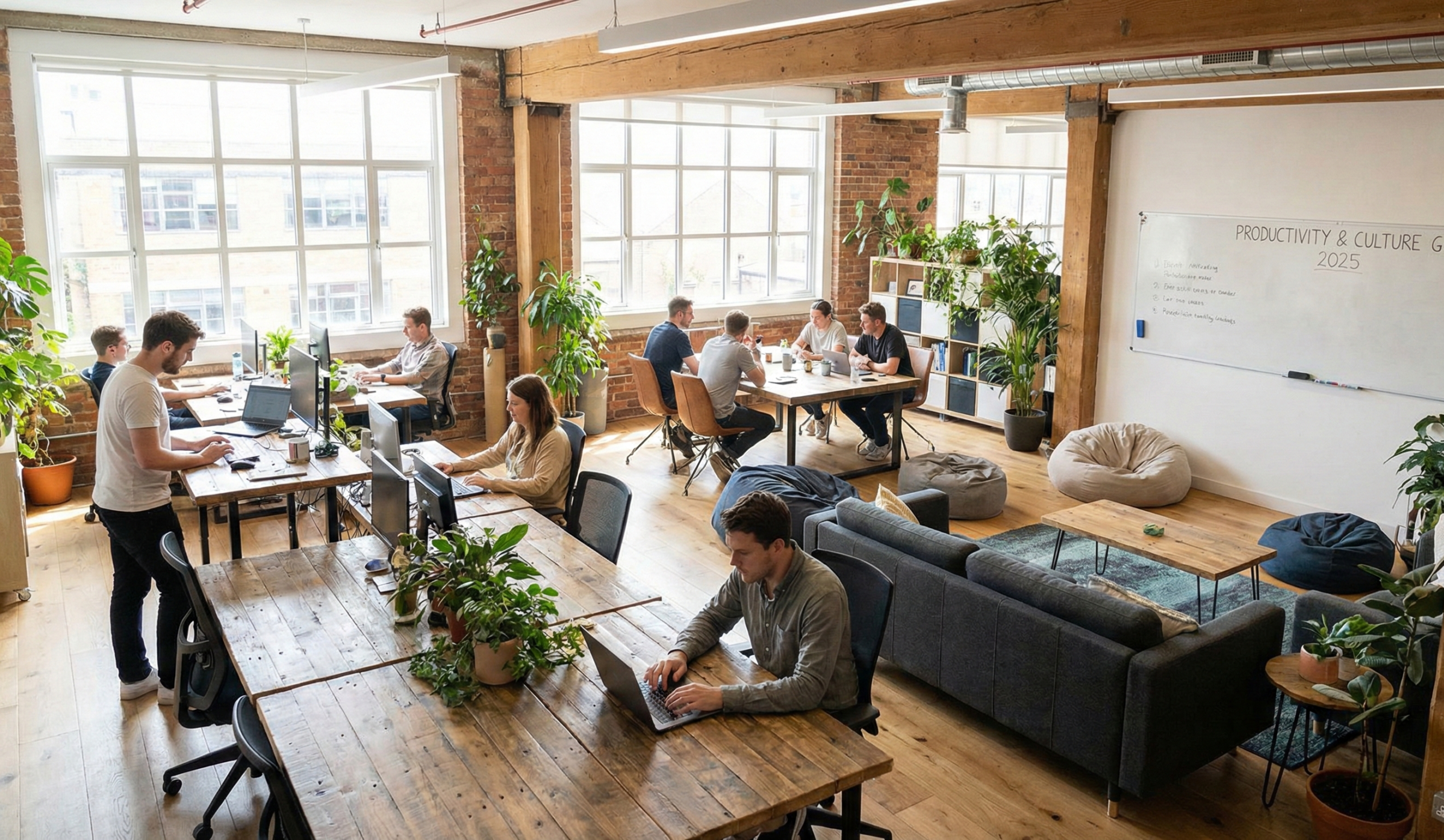
3. Strategic Lighting for Productivity
Lighting is often the most overlooked element in office interior design. Poor lighting leads to headaches, eye strain, and fatigue. Modern offices are ditching harsh fluorescent tubes for Human-Centric Lighting (HCL).
HCL systems adjust the color temperature and brightness throughout the day to match our natural circadian rhythms:
- Morning: Bright, cool light with blue tones to suppress melatonin and keep the team alert and focused.
- Afternoon: Warmer, softer light to help employees unwind as the workday ends.
Don’t forget natural light. Position workstations near windows to maximize exposure to sunlight, which is a natural mood booster.
4. The Open-Plan Redefined: Acoustic Solutions
Open-plan offices are brilliant for collaboration but notorious for noise. To solve the lack of privacy without rebuilding walls, you need to integrate smart acoustic solutions:
- Acoustic Baffles and Clouds: Suspended foam or fabric panels from the ceiling absorb sound waves, preventing echoes from bouncing around the room.
- Sound Masking Systems: These systems emit a low-level background hum (similar to airflow) that scrambles speech at a distance, reducing distractions.
- Privacy Booths: Soundproof phone booths are a must-have, allowing employees to take private calls or video conferences without disrupting the entire floor.
5. Smart Office Technology Integration
A modern office must be smart. As our dependence on digital tools grows, your office interior design needs to harmonize perfectly with technology:
- Wireless Charging Stations: Eliminate cable clutter by embedding charging pads directly into meeting tables and shared workstations.
- Smart Meeting Rooms: Install occupancy sensors that automatically adjust lighting and temperature when people enter, paired with mobile booking systems.
- Cable Management: Nothing ruins a sleek design faster than a knot of wires. Invest in furniture with built-in cable management to keep the aesthetic clean and professional.
6. Designing the Post-Pandemic Collaboration Hub
For many companies, the office has shifted from a place of daily attendance to a collaboration hub. Remote work handles the “heads-down” tasks, while office days are for meetings and team building.
Your design should reflect this by prioritizing communal areas over individual desks. This trend, often called “Resimercial” design (Residential + Commercial), blends home comforts with professional functionality:
- Use inviting sofas, throw pillows, and area rugs to make meeting spaces feel like a living room.
- Install large café-style tables for “town hall” meetings or team lunches.
- Create “collision points”—like a central coffee station—spacious enough to encourage spontaneous conversations.
7. Bold Color Palettes and Branded Accents
The safe, beige office era has officially ended. Color psychology plays a huge role in shaping employee mood and efficiency:
- Blues and Greens: Excellent for focus and efficiency. These calming colors are perfect for intense work areas.
- Yellows and Oranges: High-energy colors that spark creativity. Ideal for brainstorming rooms and design studios.
However, balance is key. Instead of painting every wall a bright color, use your brand colors as subtle accents—in chair fabrics, wall graphics, or acoustic panels. This reinforces your company identity without overwhelming the senses.

Small Office Interior Design: Adapting Modern Ideas to Limited Space
Not every business has a sprawling campus. If you are working with limited square footage, small office interior design requires a strategic approach. While the goals—productivity and comfort—remain the same, the execution focuses on efficiency.
In a small office, every inch must work harder:
- Vertical Storage: Don’t just look at the floor; look up. Utilize wall height for shelving and storage to keep the floor space clear and uncluttered.
- Glass Partitions: Replace solid walls with glass. This maintains the acoustic privacy you need but allows visual continuity, tricking the eye into seeing a much larger, brighter space.
- Multi-Functional Furniture: Invest in “Swiss Army Knife” furniture—tables that fold away or ottomans that provide hidden storage.
- Mirrors: A classic interior design trick—strategically placed mirrors can double the visual depth of a narrow hallway or small reception area.
By keeping the color palette light and neutral and decluttering aggressively, even a 500-square-foot office can feel modern, airy, and professional.
Conclusion: Future-Proofing Your Workspace
Investing in office interior design is an investment in your company’s future. It is about creating an ecosystem where your employees can do their best work. Whether you are implementing acoustic solutions, embracing biophilic design, or simply adding a splash of color, these 7 ideas provide a roadmap to a more productive and vibrant workplace.
The workspace of 2026 is flexible, human-centric, and tech-enabled. Does your office make the cut?
Ready to transform your workspace? Start by evaluating your current layout against these seven pillars and identify the “quick wins” that can make an immediate impact on your team’s morale.


